Dear Scouting Supporters,
We want to take some time to update you on what is happening both at our Council and on the national level with the Boy Scouts of America.
Let us begin by offering our heartfelt gratitude for your support and guidance over the last few years. It is because of supporters like you, that the Scouting Program has grown in our community, impacting thousands of youth and their families. On behalf of our Scouting Families, Board, and staff thank you for your generosity.
As you are undoubtedly aware, it has been a very difficult year for the Boy Scouts of America. The bankruptcy and ongoing litigation, to say nothing of the COVID19 pandemic, have posed unprecedented challenges.
The Council Board and professional staff have been working tirelessly to address these challenges head-on and ensure the continuity of the Scouting movement in the Hudson Valley into the future.
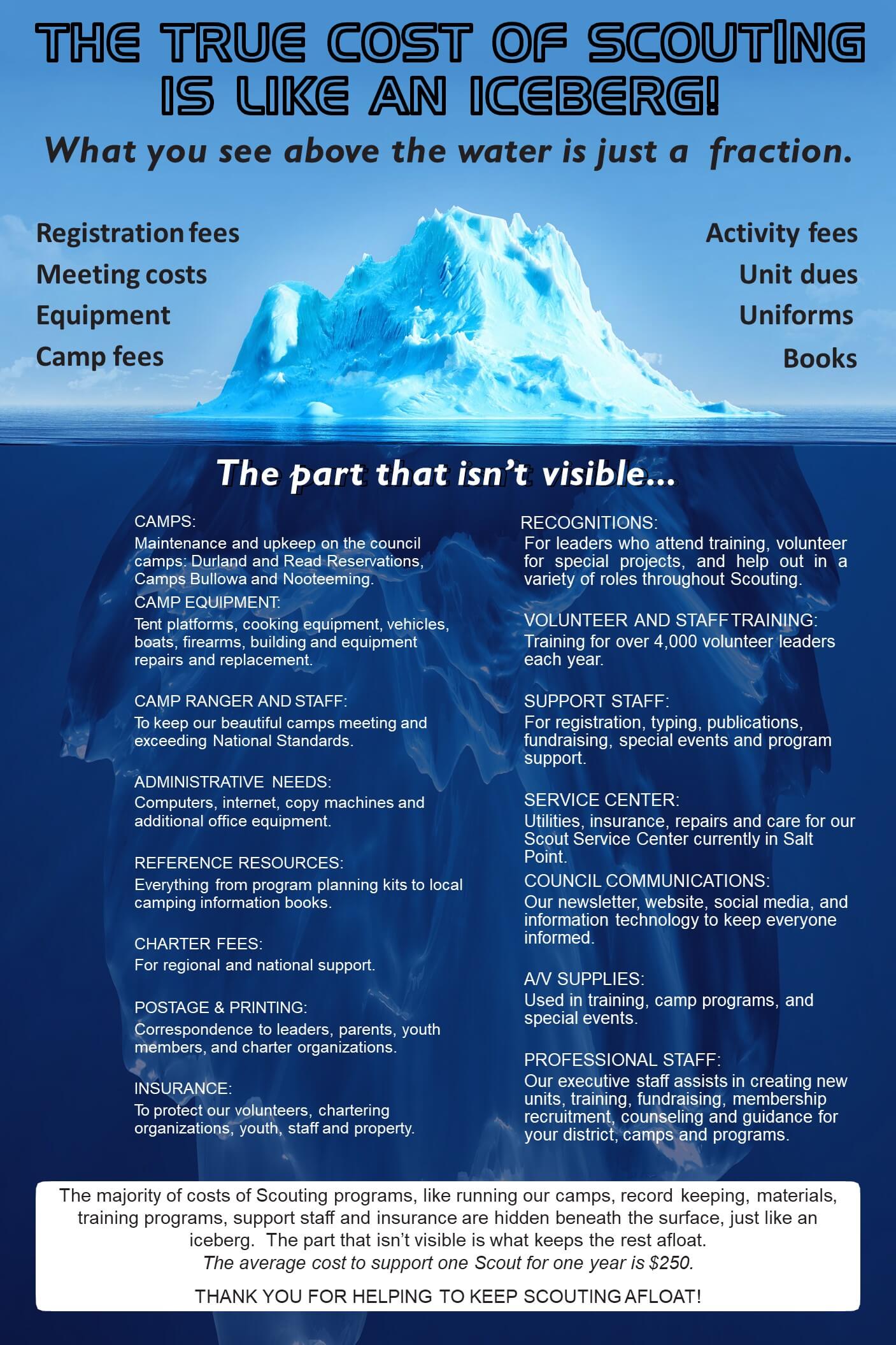
We know you likely have many questions and we would like to answer as many as we can. Included with this letter is an FAQ sheet and some additional information about the cost of Scouting.
If, after reviewing this material, you would like further information or have any additional questions, please reach out. We would be happy to speak with you.
We are very optimistic about the future of Scouting. We believe that we will emerge from the BSA bankruptcy as a stronger, more effective Council. Your trust and support will help make that happen.
Yours In Scouting,
Paxton Louis, Council Board Chairman
Ben Mills, Council Board Executive Vice Chair
Gregg Dick, Council Commissioner
Richard Stockton, Scout Executive/CEO
What is the bankruptcy and why are local Councils involved?
The National Boy Scouts of America filled Chapter 11 to address the increasing financial pressure they faced from litigation involving past abuse in Scouting. The BSA believes it has a social and moral responsibility to equitably compensate victims. During the bankruptcy proceedings, a Victims Compensation Trust has been created to compensate victims.
Local Councils have been asked to contribute to this fund. The fund amount requested cannot be disclosed at this time, but it was calculated based on a number of factors. An Ad Hoc Committee was formed to represent the councils in the country, and to help agree to the role the Councils would play in the settlement. In addition to the 253 local councils, other groups that will contribute to the settlement include the National Council, various insurance companies and a few large national charter organizations. An agreement by all these organizations - along with the plaintiff’s attorneys and courts - is the best way to assure the continuation of our mission and programming. Failure to reach a settlement could lead to years of litigation and local council bankruptcies.
There are various possible outcomes to the negotiations. In all cases, the local councils will need to contribute significant monies to the settlement fund. Depending on the final settlement amount, the council’s share will almost certainly be multi-millions of dollars. Our GHV Board and Executive Committee have been working tirelessly to evaluate how best to generate the funds we will need to contribute. A special task force was established to perform a detailed analysis of all options. They are investigating EVERY possible way to raise capital, including the reallocation of unrestricted funds, the use of existing liquid assets, and the sale of properties.
Why did I read you are selling three camps?
The press picked up the Realtor’s advertisement and published that the Council is selling all three lower camps (Bullowa, Durland, and Nooteeming).
The Council began the process of assessing property values and market interest for all three of our downstate camps. That information will be vital to helping our Board agree on the best alternatives for funding the settlement. The Council is testing the market to gain information, it is not the intent to sell all three properties.
As the Council faces a multi-million-dollar payment, please understand that as a non-profit organization most of our worth is in our assets, which is our property. It is difficult to foresee a way of making this payment without selling a property. The Council Board will look at every option and will vote on the solution that will pay our debt and point us all toward the brightest outcome.
If I donate at an event or to the Council directly, where does that money go?
As a non-profit organization, the Greater Hudson Valley Council uses general donations to pay for current programs and invoices. In fact, by the time most dollars come in, it is already known where they need to be spent. Youth program calendars are developed a year in advance. Program supplies for youth events is one of the biggest revolving costs of the Council.
Donations that are restricted to certain projects by you the donor, can only be used on that project. For example, if you donate to a capital campaign to build a staff cabin, your money is restricted to be used for only that cabin project.
It is the Board’s intent that the multi-million dollar bankruptcy payment that needs to be made by the Greater Hudson Valley Council not be drawn from the operating fund (special event and general donations) or from restricted funds.
Is Scouting worth investing in after the bankruptcy?
Yes. Scouting is a movement fueled by passion and a desire to serve the community. Together, we will grow Scouting in the Hudson Valley after the National Bankruptcy is behind us. The safety of the youth in our programs is the top priority of every Council. The Boy Scouts of America has developed some of the strongest expert-informed youth protection policies found in any youth-serving organization. From mandatory youth protection training and background checks for all volunteers and staff, to policies that prohibit one-on-one interaction between youth and adults and require that any suspected abuse be reported to law enforcement, our volunteers and employees take youth protection extremely seriously and do their part to help keep kids safe.
Scouting has been a tradition in this are for over 100 years. Scouting teaches our young people leadership skills and character development that will help shape them into tomorrow’s leaders. You support in fulfilling our mission to deliver the highest-quality, values-bases youth program in the area is needed now more than ever.
Why did Hudson Valley Council and Westchester-Putnam Council merge?
The Hudson Valley and Westchester-Putnam Councils were both strong with active volunteers, good program, quality camps, and strong supporters. However, both councils had experienced declining membership over the last 10 years. By merging the two councils, we maintain the critical mass of active Scouting families that would enable us to provide the best possible program for the youth we serve. The councils have complimentary camping facilities, similar program goals, and diverse donor bases. Merging also provided an opportunity to have more of the combined funds directed towards local youth by realizing savings in administrative and overhead costs. Merger talks were started well before the National Bankruptcy was filed. The merger was approved by both Council Boards and is the best solution to grow Scouting in the Hudson Valley.
What does the Council look like today?
Today the Greater Hudson Valley Council provides the Scouting Program in seven counties: Dutchess, Putnam, Westchester, Orange, Rockland, Sullivan and Pike. These seven counties are broken up in to eight districts: Dutchess, Muscoot, Manitoga, Mohican, Algonquin, Heritage, Rockland, and Delaware River. The new Council owns and operates four camping properties: Camp Bullowa (Stony Point), Durland Scout Reservation (Putnam Valley), Camp Nooteeming (Salt Point), and Read Scout Reservation (Brant Lake). The Council Board is made up of 47 volunteers representing every geographic area of the Council. The Council staff includes eight full-time administrative employees, four full-time camp rangers, and two part-time employees.